Posts

Why so many faiths?

Image
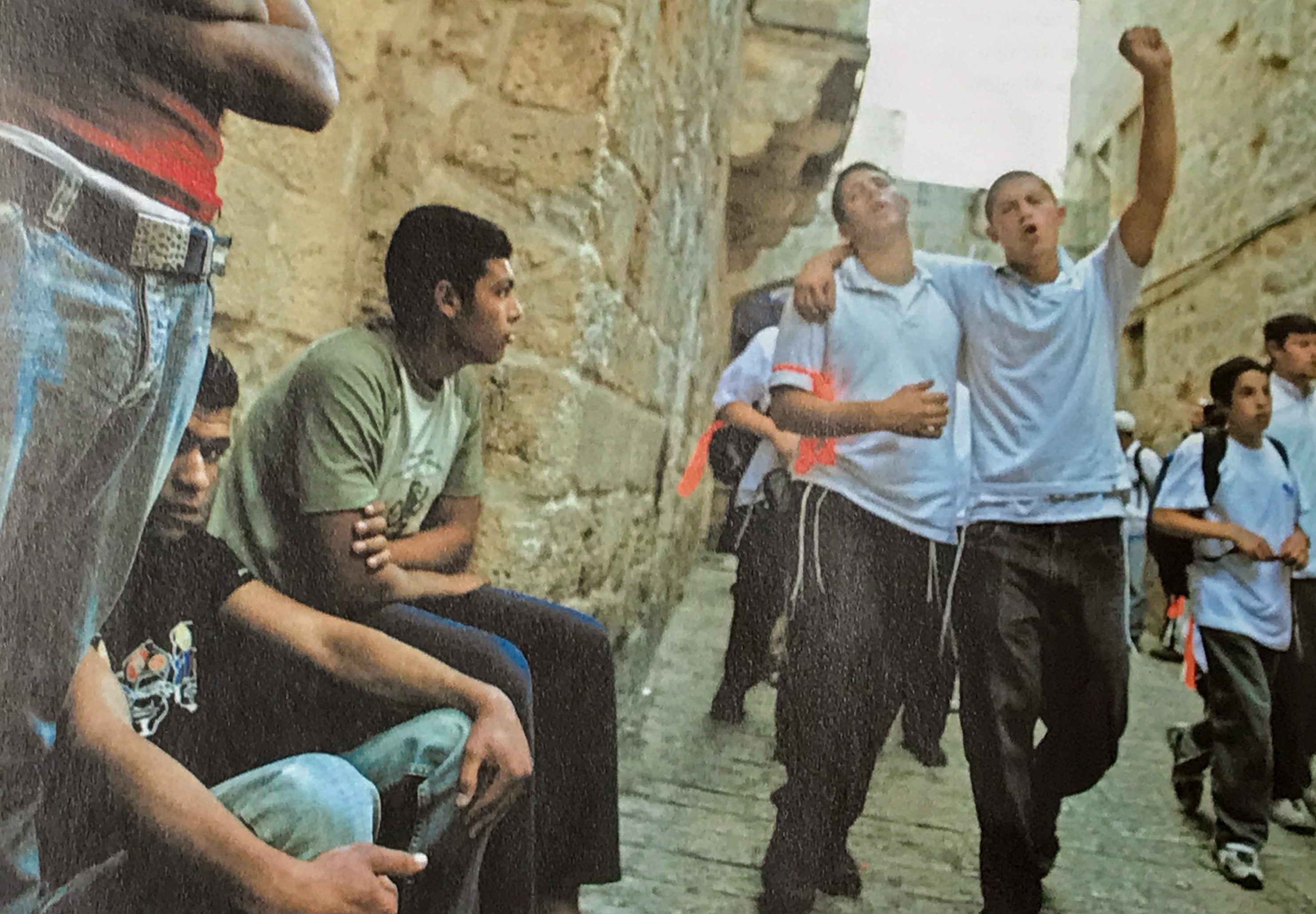
  Why so many faiths? I come across people who believe in God but will not sign up to a religion either due to the hypocrisy they read of or to confusion about which of many religions is most credible. People today are more aware of the variety of faiths across the world than their parents or grandparents through the revolution in global communications over the last half century. With so many faiths to choose from, they rightly ask, how do you decide which one is right? Elucidating, shedding light on the variety of faiths, risks being patronising towards faiths I have not known from the inside. I am impelled to do so by a conviction that the instinct for meaning, and hence religion, is in every human heart. This surely is why our species is called ‘homo sapiens’, translated ‘man who is wise’. I sense God’s love and holiness at work in believers from other faiths than my own, let alone unbelievers, and see how they contribute to the common good of society. They do so by upholding va...

Suffering

Image
  The coronavirus pandemic has been a repressing force like a brake or imprisoning ball and chain. Barred from leaving home without necessity we felt like caged hamsters on the wheel of a routine going round and round looking forward to release from both cage and wheel. The pain of our isolation was amplified by the suffering and deaths of family and friends we kept distance from following unassailable yet heartbreaking logic. In a pandemic we cannot do what we want to do for our sake and for the sake of others. Societies that accept, or have to accept, heavy regulation from government have accommodated better to this than open societies where restricting freedom to do as you like seems alien. Stepping away from people on the pavement is now ingrained and lack of intimacy with others is having widespread effect on mental health. It is a painful scenario at the time of writing although vaccinations bring hope of reducing the pain of coronavirus to something like the annual onslaught...

Loving yourself

Image
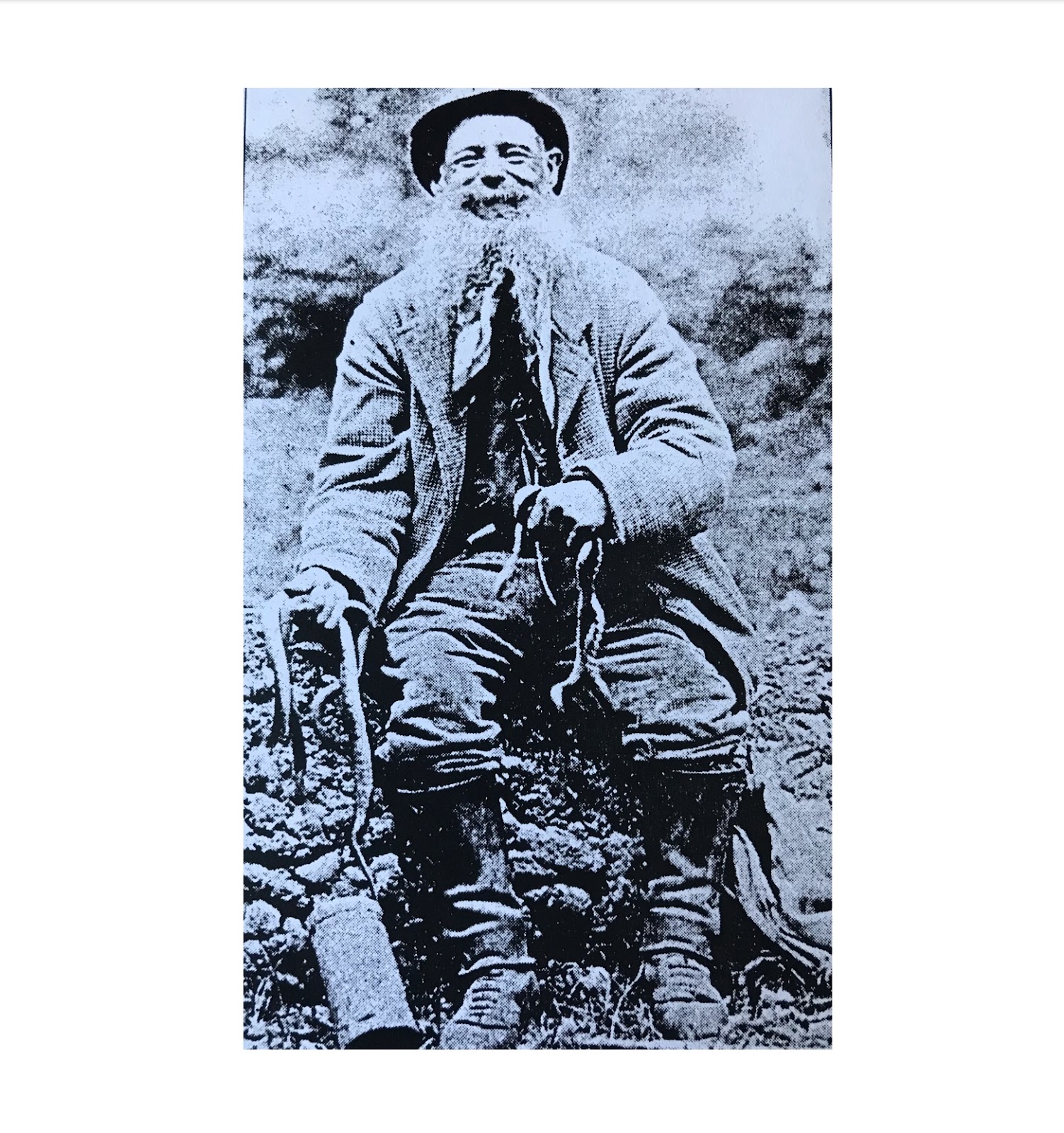
  Brusher Mills was the last and most celebrated of New Forest snake catchers. He died in 1905. A picture survives of him clutching a haul of adders in each hand. Brusher was something of an eccentric. He had a particular way of winning favour with young ladies furtively dropping an adder near a group of them retreating until they screamed. Then he appeared to rescue them from peril! Christianity can be viewed like that, scaring folk with demands to make them feel inadequate and presenting them the Saviour. Like Brusher’s tactics for winning ladies there are forms of evangelisation which do damage to truth, especially the truth about ourselves. To some Christianity looks good in principle as an altruistic movement but harsh in galvanising individuals to a cause built seemingly on self-hatred. The founder of Christianity warned, after all, that ‘those who want to save their life will lose it, and those who lose their life for my sake will find it’ (Matthew 16:25). How can Christiani...

Eucharistic controversy

Image
  ‘Twas God the word that spake it, He took the bread and brake it, And what the word did make it, That I believe and take it’. In twenty seven words Queen Elizabeth I devoutly summarises millions of words uttered and written about the presence of Christ in the bread and wine of the eucharist.  Her words cleverly duck and dive around how the words of Christ are said over the bread and what actually happens to the bread. The beauty of the sentence is its stress on what the Bible says, capturing an emphasis of the English Reformation, whilst not attempting to reduce the categorical and presumed transformative words of Jesus, ‘This is my body’.  The Reformer Martin Luther held to the same biblical faith and fell out with the more radical views of Zwingli and Calvin which disowned any transformation of the eucharistic elements: ‘Since we are confronted by God’s words, “This is my body” – distinct, clear, common, definite words, which certainly are no trope, either in Scriptur...

Marian controversy

Image
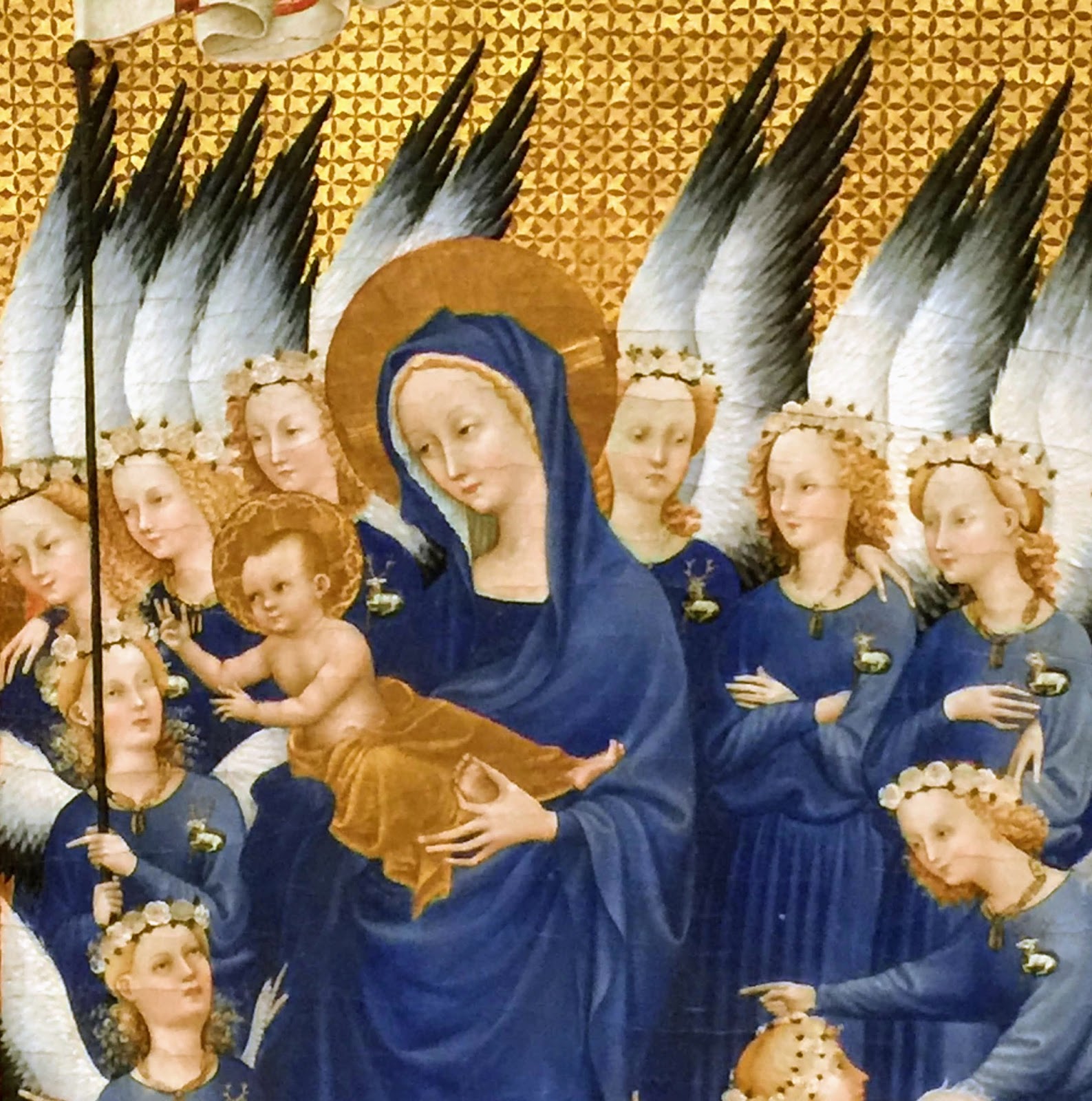
  If there is a controversial figure in Christianity beyond Jesus himself it is his mother Mary. I have found people who love her more than Jesus, people hostile to her as a distraction to faith and people who cannot understand the fuss about her. Mary rides on controversies about authority in the church, the nature of prayer and the experience of the supernatural. Shedding light on her is about opening closed doors between Catholic and Protestant and windows to the breeze of the Spirit of truth linked to Mary. Sally came to see me because she could only pray to Mary. She knew as a Christian she should pray to Jesus but guilt about her son’s marriage breakdown prevented her. She felt Jesus was angry with her so it was better to go to Mary. In ministering to her I discovered something of a culture alien to me in which the saints rather than Jesus are go-betweens with God. Meeting Sally confirmed prejudice instilled in me about Catholics being on the wrong track about Mary as I was a...

Empty tomb

Image
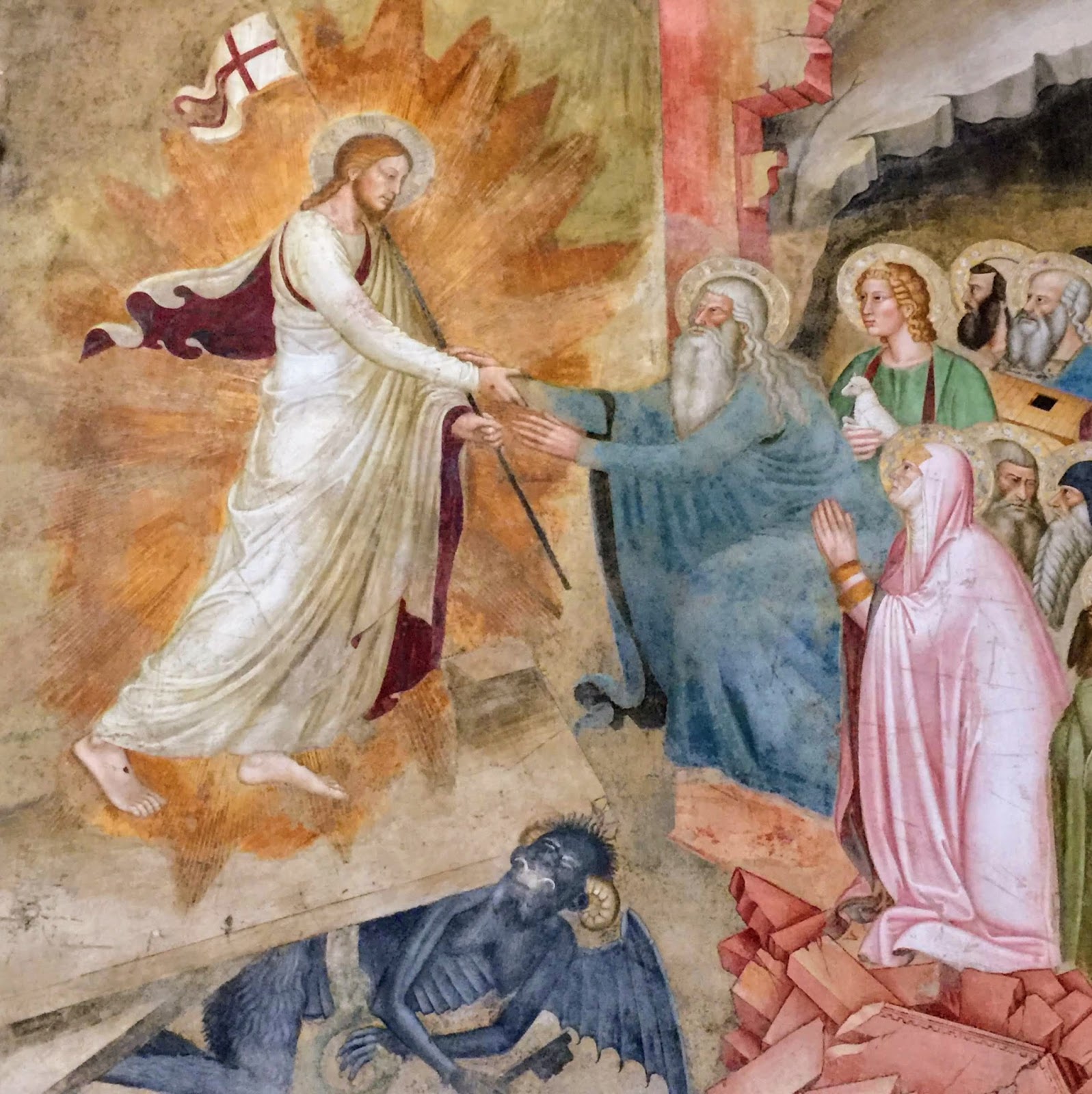
  There is no proof of Christ’s resurrection, only strong evidence. That is the case for any past event. Belief in the resurrection of Jesus stems from the faith of the church and an accumulation of evidence. In past ages its significance was limited to proving the divinity of Christ so that his birth was the incarnation of God and his suffering the overcoming of sin and death. Nowadays Christ’s resurrection is seen as more central than confirmatory both to the church’s transformational dynamic and to apologetics, the reasoned defence or ‘apologia’ of Christian faith. Christianity stands or falls on the event which has a documented history whilst being a metaphysical (‘beyond the natural’) event with significance beyond history.  Defending the resurrection we sail ‘between the Scylla of critical pedantry and the Charybdis of vaguely religious psychology’ (Rowan Williams). If we make the establishing of the empty tomb narratives our goal that can reduce to pedantry because it i...

God and the Cross

Image
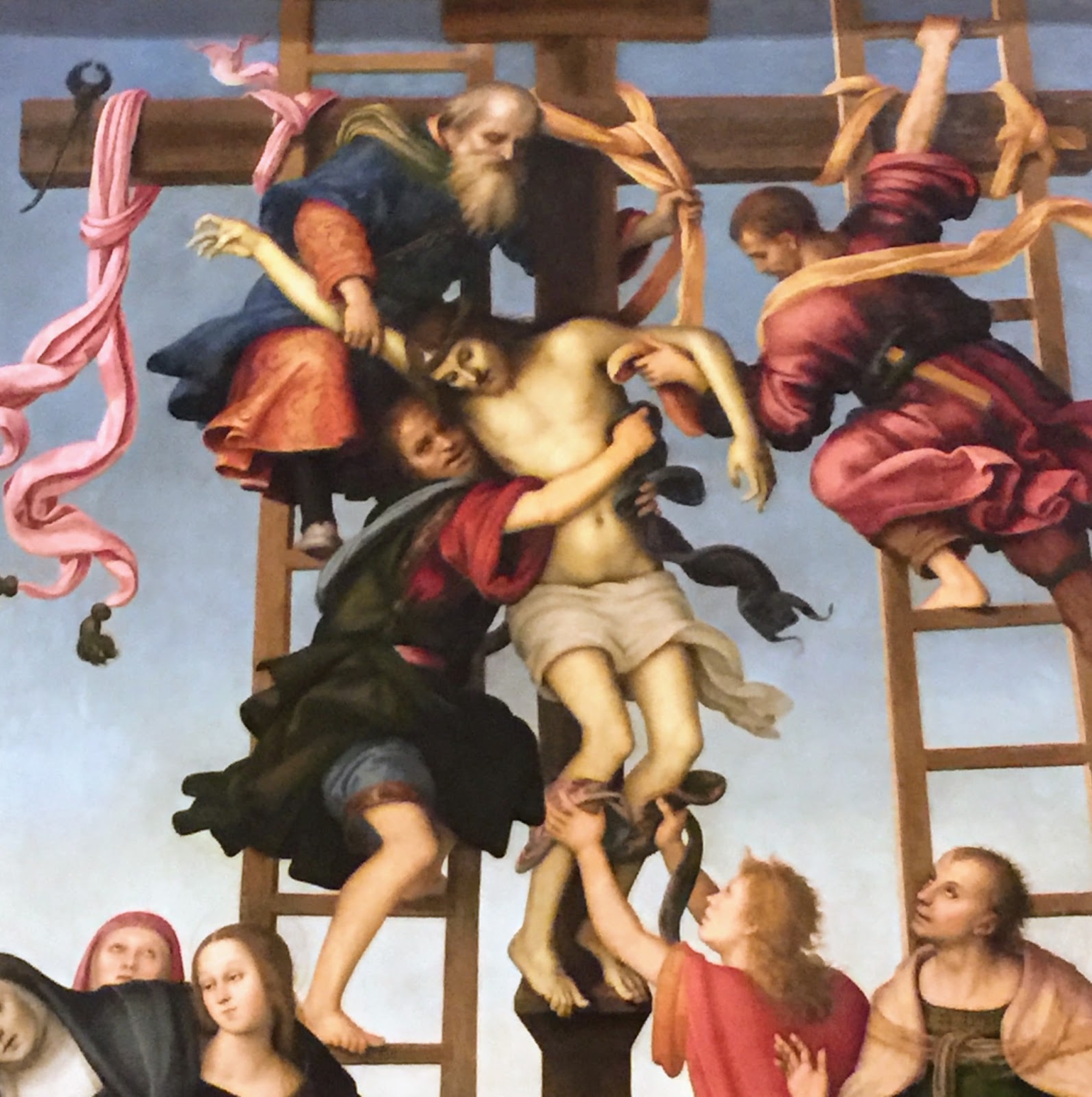
  ‘If it were true it would be cosmic child abuse’ I’ve heard in and outside Christian circles in response to the understanding of God’s love shown in the Cross. The idea of God willing his Son to suffer and die to make things right in the world raises more questions for some people than living agnostic with the wrongs. That there is no official doctrine of atonement - how God and humanity are made one in Christ - makes for another complication. So does the simplification of thinking on the Cross to throw a line to Christian seekers not to mention poetic licence employed in hymns about the passion of Christ. Evangelical songwriter Stuart Townend weathered criticism for these lines in his hymn In Christ Alone: ‘on that cross, as Jesus died, the wrath of God was satisfied’. At the other side of the Christian spectrum this phrase in a Roman Catholic prayer has detractors: ‘Look, we pray, upon the oblation of your Church and… the sacrificial Victim by whose death you willed to reconcil...